The robotics industry has a consensus problem. Across investment portfolios, research agendas, and policy conversations, humanoid robots have become the default horizon — the assumed endpoint of manufacturing automation. The bipedal, human-shaped machine is treated not as one possible architecture among many but as the inevitable one. That assumption deserves serious pressure.
The humanoid form factor is not the logical conclusion of industrial robotics development. It is a design choice with significant liability attached, and the industry’s fixation on it carries a measurable opportunity cost at precisely the moment when a different generation of robots is demonstrating what deployment at scale actually looks like.
The Form-First Fallacy
The theoretical case for humanoid robots in manufacturing rests on a single premise: human environments were built for human bodies, so a robot matching the human form can integrate into existing infrastructure without requiring factory redesign. The argument is geometrically intuitive. It is also, at current technology readiness levels, practically backwards.
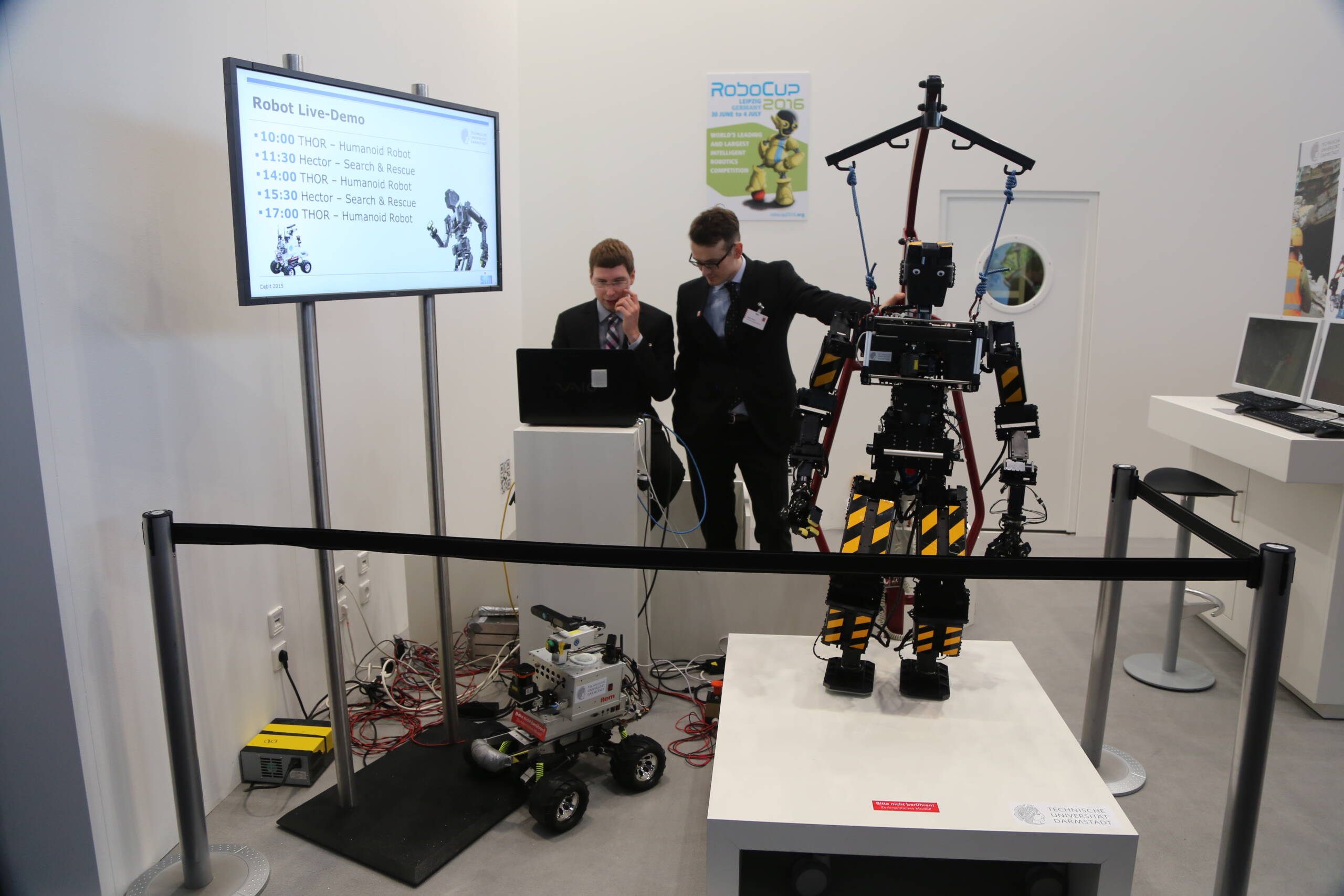
Effective robot deployment starts with the task and derives the form. What does this operation require? What range of motion, what payload capacity, what navigation envelope, what interaction with existing machinery? The answers to those questions produce a design specification. The humanoid approach inverts this entirely — it begins with the form and then asks what tasks can be performed within its constraints. This is not engineering. It is aesthetic reasoning dressed as systems design.
The consequences are predictable. A humanoid system trained for a specific industrial task performs that task adequately within its training distribution and degrades rapidly outside it. The machine looks general-purpose because it has a general-purpose shape. Its actual capability envelope is narrow. The manufacturing environment, which is variable, unpredictable, and resistant to laboratory conditions, exposes this mismatch at deployment.
What Is Already Working, and Why
The systems generating real industrial value right now share a common design logic: they solve defined problems without attempting to replicate human morphology.
Collaborative robot arms have reached the factory floor in significant volume. A cobot arm mounted at a workstation doesn’t need legs, balance, or a head. It needs reach, repeatability, and programmability. It has all three, at a payback period a plant manager can defend to a lender. Autonomous mobile robots moving bins through a warehouse don’t need hands or a torso. They need reliable navigation and load capacity. They have both. Purpose-built machine-tending systems handle high-cycle equipment operations without any pretence of generality, and precisely because of that, they run.
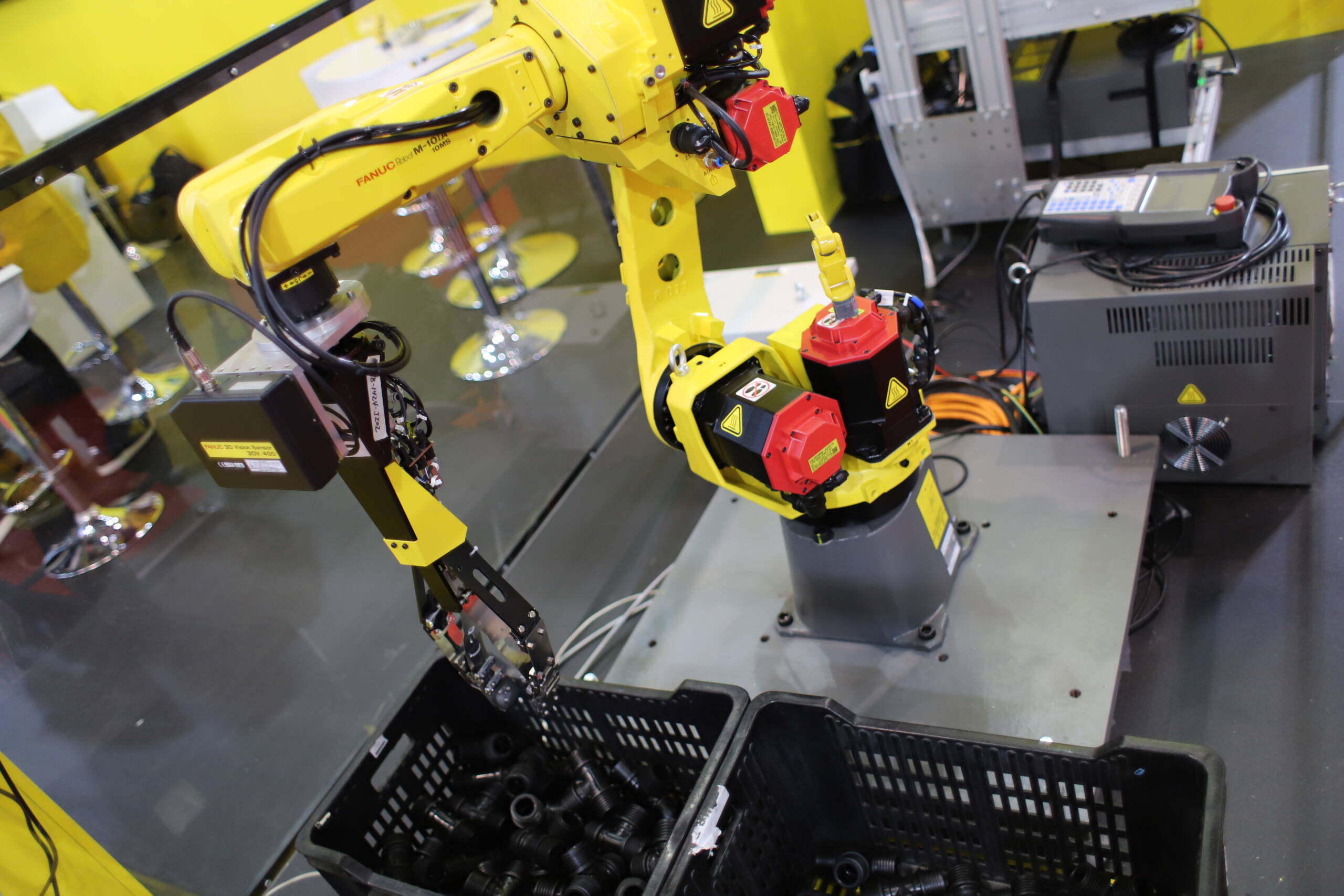
These systems sidestep the hardest problems in humanoid robotics — bipedal stability, full-body coordination, real-time whole-body manipulation — and go directly to value generation. Their form follows from the task envelope, which is why their performance in the plant resembles their performance in the vendor demonstration.
The Problems the Humanoid Inherits Without Solving
The humanoid architecture does not resolve the open research problems in robotics. It inherits all of them and adds several of its own.
General-purpose dexterous manipulation in unstructured environments remains genuinely unsolved. Grasp planning on unfamiliar objects, force modulation on deformable materials, recovery from partial failure mid-task — these are active research questions, not engineering backlogs awaiting funding. Putting five fingers on the end of an arm does not make the manipulation problem easier; it expands the state space the controller must reason over.
Bipedal locomotion adds a second category of difficulty that has no industrial justification. Balance under dynamic load, recovery from perturbation, energy budgets that make a battery-powered biped viable across a full shift — every one of these is a hard problem the wheeled mobile robot simply does not have. The factory floor is flat. It has been flat, deliberately, for over a century. Legs solve a terrain problem that manufacturing environments do not present.
The result is an architecture that carries the full cost of the unsolved manipulation problem, plus the full cost of the locomotion problem, in exchange for a compatibility argument that assumes the manipulation problem was already solved.
The Distraction Cost
There is a measurable opportunity cost to the humanoid fixation. Venture capital attention, engineering talent, and policy conversation are concentrating on a form factor that remains years from practical general deployment, while the cobot and mobile robot sector — which could absorb manufacturing investment today — struggles for the same profile.
The barrier to cobot and mobile robot adoption in the mid-market is not the hardware. The hardware is mature, catalogued, and priced. The barrier is integration capacity: process reengineering, safety system design, workforce transition, and software work that most mid-sized manufacturers lack the internal staff to execute. This is a solvable problem. It requires consulting infrastructure, standards development, and deployment-focused incentive design. It is not receiving the attention it merits, in part because that attention is pointed at humanoid pilots that generate better press coverage.
The manufacturer that spends two years waiting for humanoid technology to mature is a manufacturer that did not deploy a cobot arm this year. That deferred deployment has a real cost in productivity, labour efficiency, and competitive position.
When Policy Adopts the Industry’s Category Error
The fixation has now been written into trade policy. The Federal Communications Commission has added foreign-made humanoid robots — along with quadruped platforms, the four-legged machines usually described as robot dogs — to the list of imports restricted on cybersecurity and national security grounds. Previously approved models can still be brought in. Beijing has called for the measure to be withdrawn, described it as discriminatory, and threatened retaliation, with the announcement landing weeks before a scheduled leaders’ summit. Chinese producers hold something close to 85 percent of global humanoid installations, and two of the largest have filings in progress for public listings.
Set the diplomacy aside and look at where the line was drawn. The stated rationale is cybersecurity: networked robotic devices in critical facilities represent an attack surface, and offshore manufacture reduces visibility into what is running on them. That reasoning is sound. It is also entirely form-agnostic.
An autonomous mobile robot carrying materials through a plant has a camera, a lidar unit, a persistent network connection, a floor plan of the facility in memory, and firmware nobody at the site has audited. A vision-guided cobot arm sits inside the machine cell with the same connectivity and the same opacity. Neither has a head. Both present the exact threat model the restriction was written to address, and both continue to arrive by container, in volume, into the same facilities. The regulation captured the shape that photographs well and left the installed base alone.
This is the form-first fallacy migrating from the engineering conversation into the statute book. Industry decided the anthropomorphic silhouette was the strategic technology; policy accepted that framing and built an import control around a silhouette. If the concern is instrumented foreign hardware inside domestic production facilities, the control belongs at the level of firmware provenance, network architecture, and supply chain attestation — requirements that apply to a wheeled cart and a six-axis arm exactly as they apply to a biped. If the concern is industrial capability, the leverage sits in servo motors, harmonic reducers, precision bearings, and machine vision components, none of which the restriction touches.
There is a second-order effect worth naming. A restriction framed around the humanoid category ratifies the assumption that the humanoid category is where the value is. Capital allocators read that as confirmation. Domestic programmes shape themselves to the protected form factor, because that is where the protection is. The policy does not merely fail to correct the industry’s misallocation; it subsidises it.
Reframing the Deployment Question
The right question for industrial robotics strategy is not which form factor wins the long-term race. It is which systems can generate reliable value in real manufacturing environments at current technology readiness levels, and what infrastructure is needed to make deployment at scale routine.
Cobot arms answer that question for fixed-station operations. Autonomous mobile robots answer it for intralogistics. Purpose-built machine-tending systems answer it for high-cycle equipment operations. Collaborative inspection platforms are beginning to answer it for quality control in confined and hazardous spaces.
None of these systems have a face. All of them are working.
Humanoid robots will eventually be useful at scale. The research problems are real but not permanent. The question is what gets built between now and then. The industrial robotics transition that actually happens over the next decade will be built on platforms that solved defined problems with appropriate form factors, deployed by manufacturers who could evaluate the investment case on a standard payback model. The humanoid will arrive eventually, and it will find factories that have already been transformed by the robots that came before it — the ones that looked less impressive and worked.
Leave a Reply