Smart cities represent a transformative approach to urban development, leveraging advanced technologies and data analytics to enhance the quality of life for residents, optimize resource management, and ensure sustainable growth. The essence of a smart city lies in its ability to integrate various technologies—such as the Internet of Things (IoT), artificial intelligence (AI), and big data—into the fabric of urban infrastructure. This integration fosters a more efficient, responsive, and interactive environment.
At the heart of a smart city is a robust network of sensors and connected devices that collect real-time data on a myriad of urban activities and environmental conditions. These sensors are embedded in everything from traffic lights and public transportation to water supply systems and energy grids. By continuously monitoring and analyzing this data, city administrators can make informed decisions that improve operational efficiency and enhance public services. For instance, smart traffic management systems can adjust traffic light timings based on real-time traffic conditions, reducing congestion and minimizing commute times. Similarly, smart energy grids can dynamically balance electricity demand and supply, promoting energy conservation and reducing costs.
Public safety is another critical domain where smart city technologies make a significant impact. Advanced surveillance systems equipped with AI can detect unusual activities or patterns, enabling quicker response times from law enforcement agencies. Additionally, emergency services can benefit from real-time data, allowing for more efficient deployment of resources during critical situations. This proactive approach to public safety not only enhances security but also fosters a sense of well-being among residents.
Sustainability is a cornerstone of the smart city concept. With the world facing increasing environmental challenges, smart cities prioritize eco-friendly initiatives to reduce their carbon footprint. Smart waste management systems use sensors to monitor waste levels in bins and optimize collection routes, reducing fuel consumption and emissions. Urban planning in smart cities often includes green spaces and promotes the use of renewable energy sources. Buildings are designed to be energy-efficient, incorporating smart lighting and heating systems that adjust based on occupancy and external conditions.

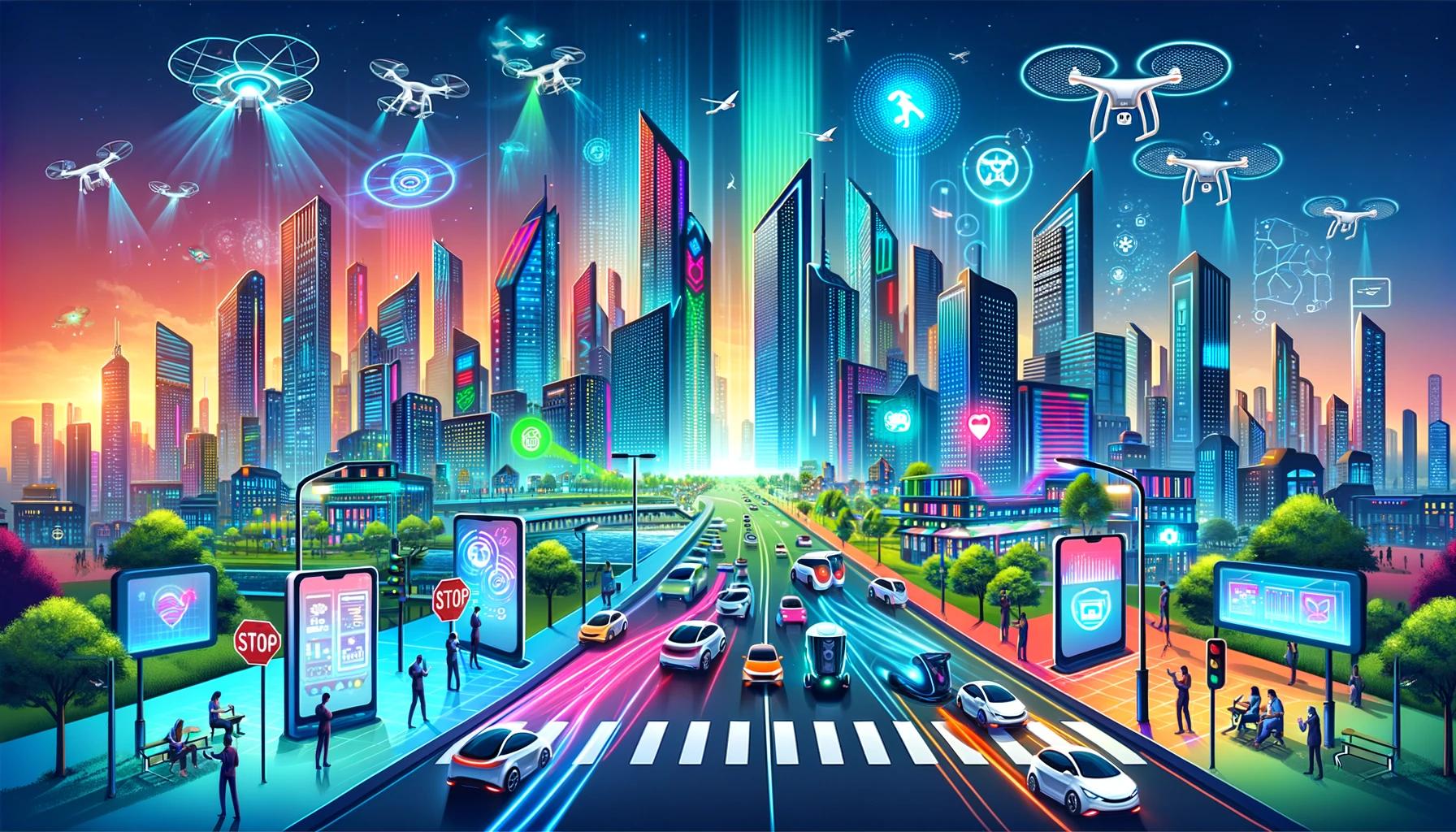
The poster for the tech conference on Smart Cities
Another vital aspect of smart cities is their focus on inclusivity and accessibility. By leveraging digital platforms and mobile applications, smart cities can provide residents with easy access to public services and information. Citizens can interact with their local government through apps, reporting issues such as potholes or broken streetlights, and receive timely updates on the resolution of their concerns. This participatory approach not only enhances the efficiency of service delivery but also strengthens the bond between residents and their city.
Economic growth is also a significant benefit of smart city initiatives. By fostering an environment that encourages innovation and entrepreneurship, smart cities can attract businesses and talent, creating jobs and boosting the local economy. High-speed internet connectivity and smart infrastructure support the development of tech hubs and incubators, where startups and established companies can collaborate on cutting-edge solutions.
Education and healthcare systems in smart cities also see substantial improvements. Schools can implement smart technologies to enhance learning experiences, using interactive digital tools and personalized learning platforms. Healthcare services become more efficient with telemedicine and remote monitoring, allowing for better patient care and management of chronic diseases.
The concept of smart cities is not without its challenges. Issues such as data privacy, cybersecurity, and the digital divide must be addressed to ensure that the benefits of smart city technologies are realized without compromising individual rights or exacerbating social inequalities. Effective governance frameworks and public-private partnerships are essential in navigating these challenges and ensuring that smart city initiatives are inclusive, secure, and beneficial to all residents.
In essence, smart cities represent the future of urban living, where technology and data play pivotal roles in creating more livable, efficient, and sustainable environments. By embracing the principles of connectivity, sustainability, and inclusivity, smart cities can offer a higher quality of life for their residents while addressing the pressing urban challenges of the 21st century.
Leave a Reply