Microsoft will cut fewer than 5,500 jobs next week — under 2.5 percent of a 220,000-person workforce — across sales, consulting, and its Xbox division, with the reductions timed to the close of its fiscal year on June 30. The number is smaller than last year’s 15,000-plus across two rounds, and taken alone it says little. Taken in context it says everything: Microsoft is trimming the parts of its cost structure that carry people and leaving untouched the part that carries silicon.
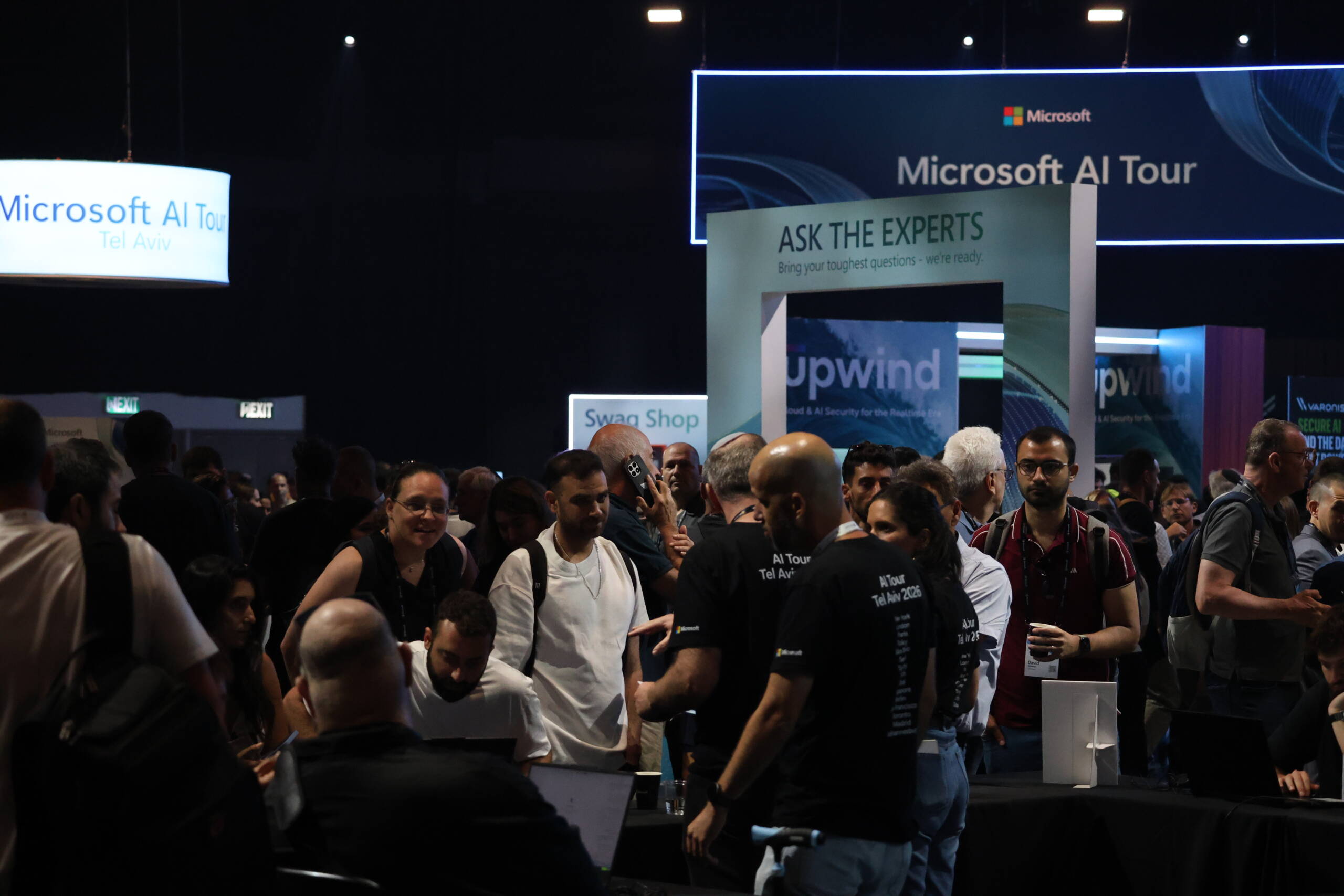
This is a Microsoft AI Tour stop in Tel Aviv — a packed floor, an Ask the Experts booth, security partners like Upwind and Varonis lining the hall. Events like this are where Microsoft’s sales and consulting teams do their work: showing enterprises what its AI platform can do and convincing them to buy. Those are the teams being cut next week. Microsoft is spending record sums to fill rooms like this one, and at the same time trimming the people who staff them, because the money is going into AI infrastructure instead of headcount.
The capital line is protected
Microsoft has guided fiscal 2026 capital expenditure to $190 billion. Roughly $25 billion of that figure is not new capacity but higher prices for the same hardware — memory and storage components that have surged since late last year, in several cases more than tripling, with AI infrastructure demand the direct cause. The company spent $34.9 billion in the first quarter alone, an unprecedented single-quarter outlay, roughly half of it on the GPUs and CPUs that depreciate fastest. Gross margin has already compressed to 67.6 percent, the narrowest since 2022, as depreciation from the build-out mounts. Amy Hood has told investors the company expects to remain capacity-constrained through the year.
None of that spending is under review. The layoffs are. When a company protects a $190 billion capital program and adjusts a payroll line instead, it has told you which of the two it considers fixed.
The memory supercycle is now on the income statement
The $25 billion component premium is the most important line in Microsoft’s guidance, because it is the memory cycle arriving where it was always going to arrive. For most of the past year the DRAM and NAND shortage has been a supplier story — a Micron story, a SanDisk story, a pricing story confined to the vendors. It is now a hyperscaler cost story. Microsoft is absorbing the supercycle directly into capex, and because the capital program is non-negotiable, the pressure has to be released somewhere else on the cost structure. Labor is where it is being released.
This is the mechanism worth watching across the group. Every dollar the memory cycle adds to a hyperscaler’s hardware bill is a dollar that has to be found elsewhere to defend the margin. Microsoft found roughly 5,500 of them in headcount.
Xbox shows it in miniature
The gaming cuts make the chain explicit. Asha Sharma’s Reset memo already conceded a $500 million revenue decline over five years and a 3 percent margin, and Xbox has raised console prices worldwide in part because the same memory components that inflate Microsoft’s data-center bill inflate the cost of a shipping console. Hardware that runs on DRAM and NAND does not escape a DRAM and NAND supercycle. The division is cutting staff, slashing marketing, and reportedly severing vendors, all while its parent pours record sums into the infrastructure layer that is squeezing it. The same input cost is expanding one budget and contracting the other.
The adjustment variable
The macro frame is not incidental. U.S. technology firms have announced 123,653 job cuts in 2026, up 66 percent year over year, and AI has been the single most-cited cause for three consecutive months — already linked to 87,714 reductions this year, past the total for all of 2025. The industry has settled on a division of labor between capital and labor: capacity gets funded, people get counted against it. Microsoft has spent roughly $97 billion on infrastructure over the last four quarters to secure about $37 billion in AI annual recurring revenue, a return that has not yet closed. Until it does, the capital program stays fixed and the workforce stays variable. Next week’s cuts are not a retreat from the AI build-out. They are how it is paid for.
Leave a Reply